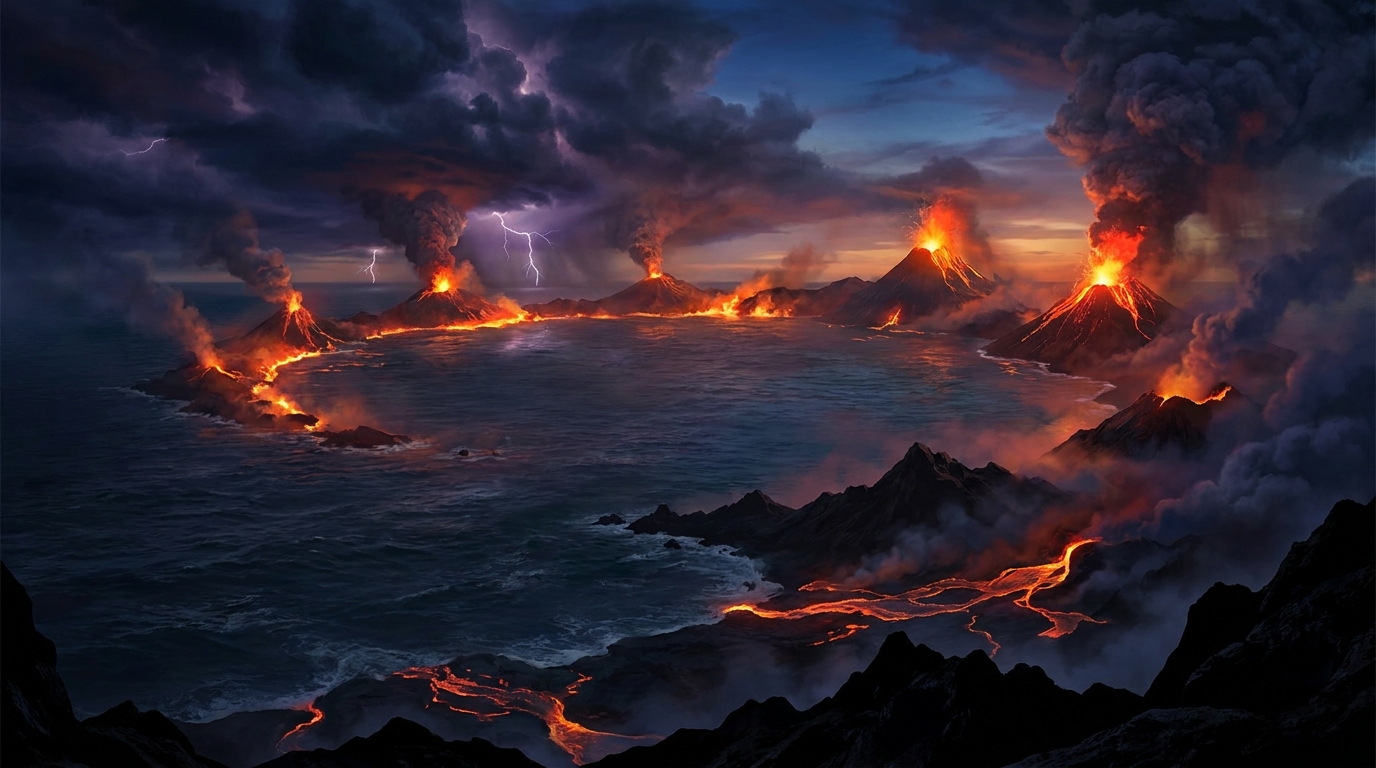
Global volcanic activity remained elevated during the past 24 hours, with monitoring networks documenting 44 distinct volcanic events worldwide. Notable eruptions include explosive activity at Awu in Indonesia, sustained ash emissions from Sabancaya in Peru maintaining an Orange alert status, and continued lava extrusion at Fuego in Guatemala. According to the Smithsonian Global Volcanism Program and regional monitoring agencies including Indonesia’s PVMBG and Peru’s IGP, the current activity reflects the ongoing dynamic processes along the Pacific Ring of Fire.
Which Volcanoes Erupted Today?
Mount Awu (Sangihe Islands, Indonesia) generated explosive eruptions detected late on May 20, with the most recent activity reported at 22:29 UTC according to Smithsonian GVP records. This 1,320-meter stratovolcano, known for its history of VEI 4 explosive events, remains under close surveillance by Indonesian authorities due to its location on a populated island.
Sabancaya (Arequipa Region, Peru) maintained vigorous eruptive activity throughout the reporting period, sustaining an Orange alert level—the second-highest warning tier in the country’s volcanic alert system. The 5,976-meter volcano produced ash plumes detected by regional monitoring networks at 10:15 UTC on May 20, prompting continued warnings to aviation and agricultural communities in the Colca Canyon region.
Sangay (Morona-Santiago Province, Ecuador) exhibited persistent explosive activity characteristic of one of the Andes’ most active volcanoes. Reported by Ecuador’s Instituto Geofísico (IG-EPN), the 5,230-meter stratovolcano generated eruptive columns that posed ongoing hazards to downriver communities and aircraft traversing South American air corridors.
Semeru (East Java, Indonesia) produced confirmed eruptions early on May 20, with activity detected at 10:15 UTC according to Smithsonian GVP data. Standing as Java’s highest peak at 3,676 meters, Semeru frequently produces Vulcanian eruptions and pyroclastic flows that threaten the densely populated plains surrounding the volcano.
Fuego (Guatemala) continued its pattern of frequent explosive activity, maintaining an Advisory alert level during the reporting period. Monitoring agencies documented eruptive events at 21:00 UTC on May 20, including characteristic strombolian explosions and lava flows that descend the flanks toward agricultural communities on the volcano’s southern slopes.
What Are the Aviation Hazards?
Volcanic ash emissions from today’s eruptions present significant aviation safety concerns despite specific plume heights remaining unconfirmed in initial reports. The ingestion of volcanic ash particles can cause catastrophic engine failure in jet aircraft, making real-time monitoring of these active volcanoes critical for flight path planning across the Pacific and South American corridors.
Sabancaya’s sustained Orange alert status particularly affects air traffic traversing southern Peru, with the Observatorio Vulcanológico del INGEMMET reporting continuous ash emissions. Pilots operating routes near Sangay and Fuego should anticipate potential NOTAMs (Notices to Airmen) as these volcanoes frequently produce ash columns exceeding 20,000 feet above sea level.
Which Regions Face the Highest Risk?
Indonesia dominates today’s activity with multiple erupting volcanoes including Awu, Semeru, Dukono, Ibu, Lewotolok, Marapi, Merapi, and Lewotobi. The archipelago’s PVMBG (Pusat Vulkanologi dan Mitigasi Bencana Geologi) maintains heightened vigilance as several of these peaks threaten populated valleys and critical infrastructure.
The Philippines shows sustained unrest at Mayon, Taal, Kanlaon, and Bulusan, with the Philippine Institute of Volcanology and Seismology (PHIVOLCS) monitoring gas emissions and seismic swarms. These volcanoes lie within the densely populated Luzon and Visayas regions, requiring constant evacuation preparedness.
The Americas feature significant activity along the Andean volcanic chain, with Sabancaya (Peru), Sangay (Ecuador), Reventador (Ecuador), and Puracé (Colombia) all reporting eruptive events. In North America, Kīlauea (Hawaii) and Great Sitkin (Alaska) continue monitored activity according to USGS reports.
Current Activity Summary Table
| Volcano | Location | Event Type | Alert Level |
|---|---|---|---|
| Awu | Indonesia | Eruption | Monitoring |
| Sabancaya | Peru | Eruption | Orange |
| Sangay | Ecuador | Eruption | Monitoring |
| Semeru | Indonesia | Eruption | Monitoring |
| Fuego | Guatemala | Eruption | Advisory |
| Shiveluch | Russia | Activity | – |
| Mayon | Philippines | Activity | – |
| Popocatépetl | Mexico | Activity | – |
| Reventador | Ecuador | Eruption | – |
| Bezymianny | Russia | Activity | – |
| Ibu | Indonesia | Eruption | – |
| Dukono | Indonesia | Eruption | – |
| Taal | Philippines | Activity | – |
| Merapi | Indonesia | Activity | – |
| Kīlauea | United States | Activity | – |
| Great Sitkin | United States | Activity | – |
| Lewotolok | Indonesia | Eruption | – |
| Marapi | Indonesia | Activity | – |
| Kanlaon | Philippines | Activity | – |
| Lewotobi | Indonesia | Eruption | – |
Frequently Asked Questions
Is volcanic activity increasing globally?
Volcanic activity is not increasing globally; rather, detection capabilities have improved dramatically through satellite thermal monitoring and global seismic networks. According to the Smithsonian Global Volcanism Program, we are documenting approximately the same number of erupting volcanoes annually as historical averages, but remote sensing now captures events that previously went unobserved in isolated regions.
What precautions should travelers take near active volcanoes?
Travelers should check current alert levels through official sources like USGS or local geological surveys before visiting volcanic regions, and identify evacuation routes upon arrival. During active periods, carry N95 masks to protect against respiratory irritation from volcanic ash, and heed all exclusion zone warnings as pyroclastic flows and lahars can travel faster than evacuation vehicles.
How do scientists monitor volcanoes that erupt simultaneously?
Scientists utilize a combination of ground-based seismic networks, satellite-mounted thermal infrared sensors, and gas monitoring stations to track multiple eruptions simultaneously across global networks. International data sharing through organizations like the Smithsonian GVP and the World Organization of Volcano Observatories (WOVO) ensures that no active volcano goes unmonitored even during periods of widespread volcanic unrest.
Track this event live on the map!
Download GeoShake and get instant earthquake alerts.
Download GeoShake