
At just ten kilometers beneath the surface, the Earth’s crust fractured on March 26, sending a sharp jolt through China’s Sichuan province—a landscape still haunted by the catastrophic 2008 Wenchuan earthquake. The magnitude 4.5 tremor struck 9 kilometers west-northwest of Bowangshan at 6:42 PM local time, according to USGS data, rattling nerves in a region where tectonic forces have long carved a legacy of destruction into the steep valleys of the Longmenshan mountains.
Why Is This Region So Prone to Earthquakes?
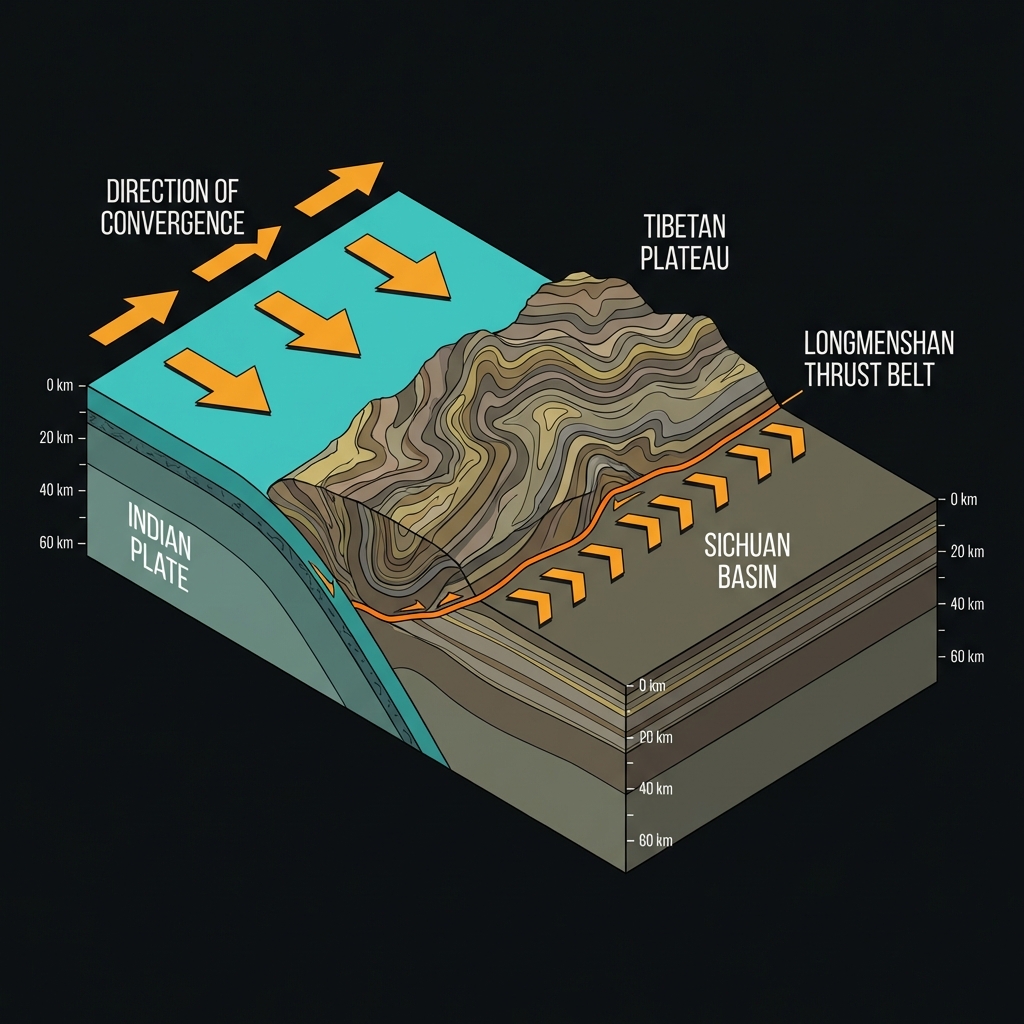
The answer lies in a continental collision that began 50 million years ago. The ongoing convergence of the Indian and Eurasian plates has forced the Tibetan Plateau skyward, creating a geological pressure cooker. As the plateau pushes eastward against the rigid Sichuan Basin, strain accumulates along major fault systems like the Longmenshan thrust belt. This crustal deformation represents some of the most intense tectonic activity on Earth, storing elastic energy that releases periodically as earthquakes.
Seismologists classify this type of event as a shallow crustal earthquake, occurring within the brittle upper layer of the Earth’s crust where rocks fracture abruptly rather than flow. The 2008 Wenchuan earthquake—which claimed over 87,000 lives—ruptured along this same fault system, illustrating how the India-Eurasia collision continues to reshape both the landscape and human history in western China. More recently, the magnitude 6.2 Zhaotong earthquake in 2014, which struck 199 kilometers from today’s epicenter, demonstrated that this tectonic machinery continues generating significant hazards across the region.
How Does a 10-Kilometer Depth Change the Impact?
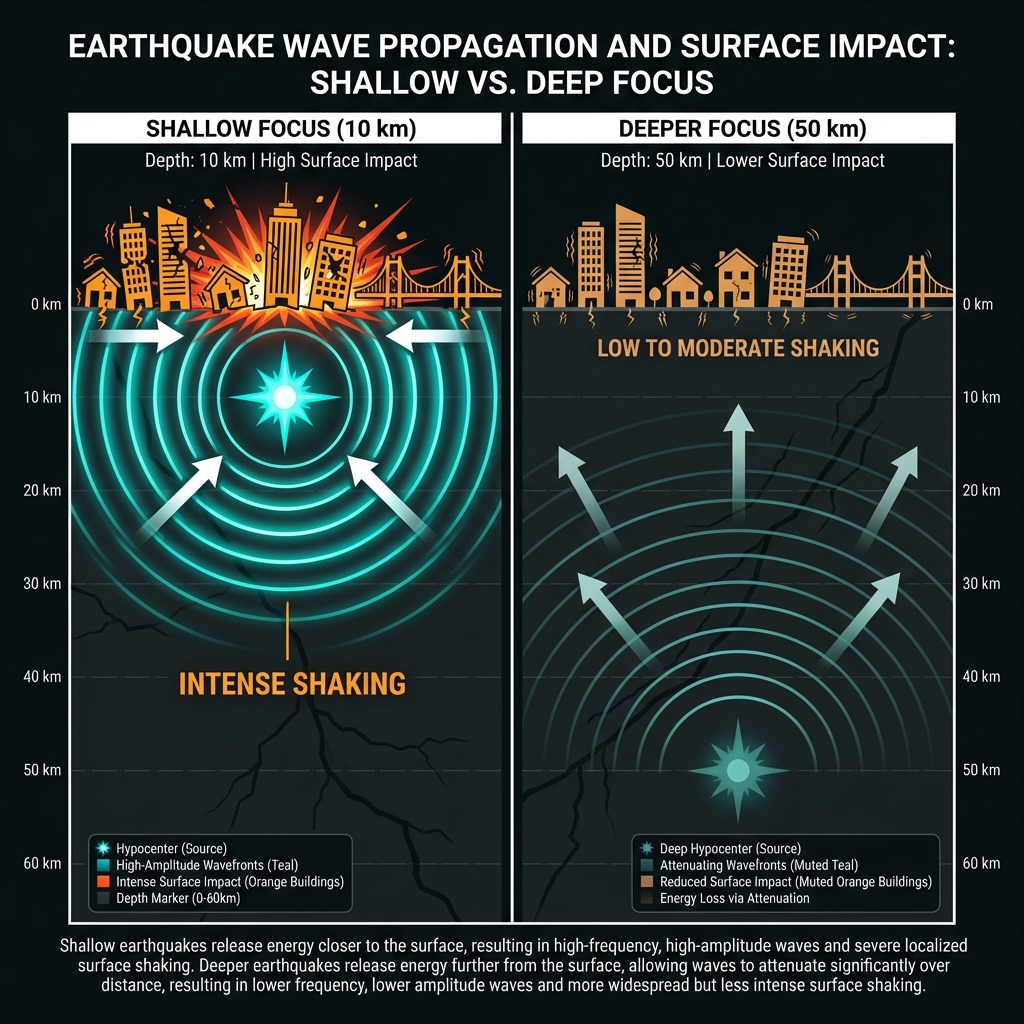
Depth determines destiny in seismology. At ten kilometers, this earthquake qualifies as shallow-focus, meaning seismic waves had less time to attenuate before reaching the surface compared to deeper quakes. The shaking likely felt sharper and more abrupt than a deeper event of equivalent magnitude, though the moderate 4.5 magnitude limited the area of perceptible motion to roughly 30-50 kilometers from the epicenter.
To put this event in historical context:
| Event | Magnitude | Depth | Distance from Bowangshan | Impact |
|---|---|---|---|---|
| March 26, 2026 | 4.5 | 10 km | Epicenter | Localized shaking, minor damage possible |
| August 3, 2014 | 6.2 | 10 km | 199 km | 617 fatalities, widespread destruction |
| May 12, 2008 | 7.9 | 19 km | ~70 km | Catastrophic, 87,000+ deaths |
While today’s tremor pales in comparison to these historical devastations, its shallow nature meant residents experienced acceleration comparable to a heavy truck passing nearby—sudden, jarring, and impossible to ignore. The 2014 Zhaotong event, despite occurring nearly 200 kilometers away, shared this shallow characteristic, proving that depth often matters as much as magnitude when assessing ground-shaking intensity.
What Should We Watch For?
Unlike the chaotic aftershock sequences that follow major ruptures, this isolated event—singular in a week of regional quiet—suggests a release of localized stress rather than the beginning of a larger swarm. However, seismologists will monitor for any smaller aftershocks in the coming days, as shallow earthquakes can occasionally trigger minor adjustments on nearby fault segments.
The event serves as a reminder that Sichuan’s seismic hazard remains acute despite improved building codes implemented after 2008. While magnitude 4.5 earthquakes rarely cause structural collapse in modern construction, they test preparedness and validate the region’s continued investment in earthquake early warning systems.
Frequently Asked Questions
How strong was this earthquake?
The earthquake registered magnitude 4.5, classifying it as a light earthquake capable of causing noticeable indoor shaking and potentially minor damage to poorly constructed buildings. Its shallow depth of 10 kilometers amplified the surface shaking compared to deeper events of similar magnitude, meaning residents felt sharper jolts than the number alone might suggest.
Is there a tsunami risk?
No tsunami warning was issued for this event. According to USGS data, the earthquake occurred inland within the Sichuan mountain ranges at significant elevation, far from any oceanic coastline. Tsunamis require vertical displacement of the seafloor during underwater earthquakes, conditions not present in this landlocked, mountainous region.
Why is this area so seismically active?
Sichuan sits at the boundary between the Tibetan Plateau and the stable Sichuan Basin, where the ongoing collision of Indian and Eurasian tectonic plates forces crustal deformation. This convergence creates massive horizontal stress along thrust faults like the Longmenshan system, generating some of China’s most destructive earthquakes including the 2008 Wenchuan disaster.
Track this event live on the map!
Download GeoShake and get instant earthquake alerts.
Download GeoShake