
A Shallow Threat Near Samoa’s Haunted Waters
Ten kilometers below the sunlit surface of the South Pacific—shallow enough for seismic energy to strike with brutal efficiency—a magnitude 6.3 earthquake ruptured on Sunday, sending shockwaves through a region still haunted by catastrophe. The quake struck just 35 kilometers from the epicenter of the devastating 2009 M8.1 Samoa tsunami earthquake, a proximity that has seismologists monitoring the Tonga-Kermadec subduction zone with heightened vigilance. At 155 kilometers southwest of Lotofagā, the event was close enough to rattle nerves across the Samoan islands yet far enough offshore to spare population centers from the worst immediate impacts.
The Tectonic Forge
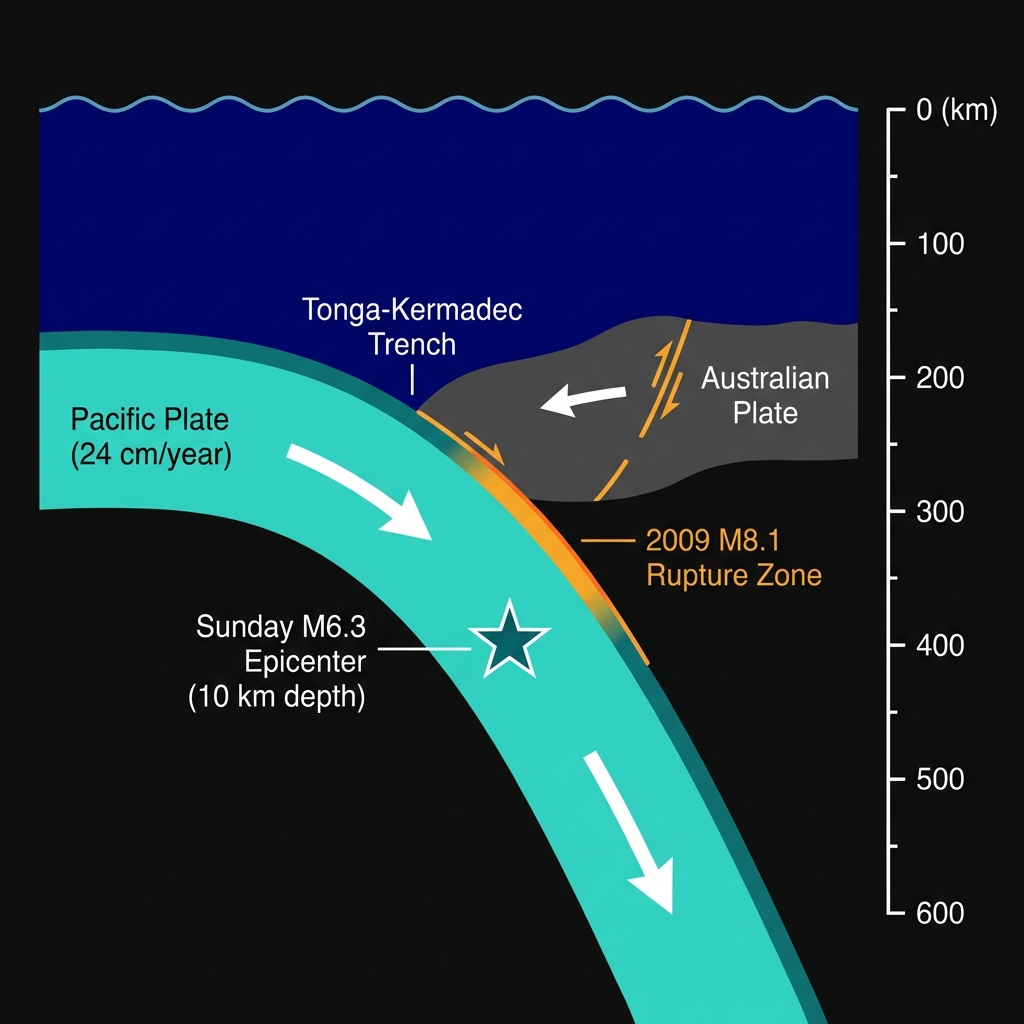
This is not a quiet corner of the planet. The earthquake occurred along the Tonga-Kermadec trench, where the Pacific Plate plunges beneath the Australian Plate at one of the fastest subduction rates on Earth—up to 24 centimeters per year. This relentless collision has sculpted a history of violence: the 2009 event, which killed nearly 200 people and generated waves up to 14 meters high, ruptured almost directly adjacent to Sunday’s shaking. But the region’s memory extends further back. In 1995, a M7.4 earthquake struck 126 kilometers from today’s epicenter, while more recent reminders—including a M6.8 in 2022 and another in 2017—demonstrate that stress accumulates here constantly. Seismologists classify this as a highly active seismic corridor, where the shallowness of today’s event—just 10 kilometers deep—transforms what might otherwise be a distant geological rumble into something far more personal for coastal communities.
When the Earth Shakes Close to Home
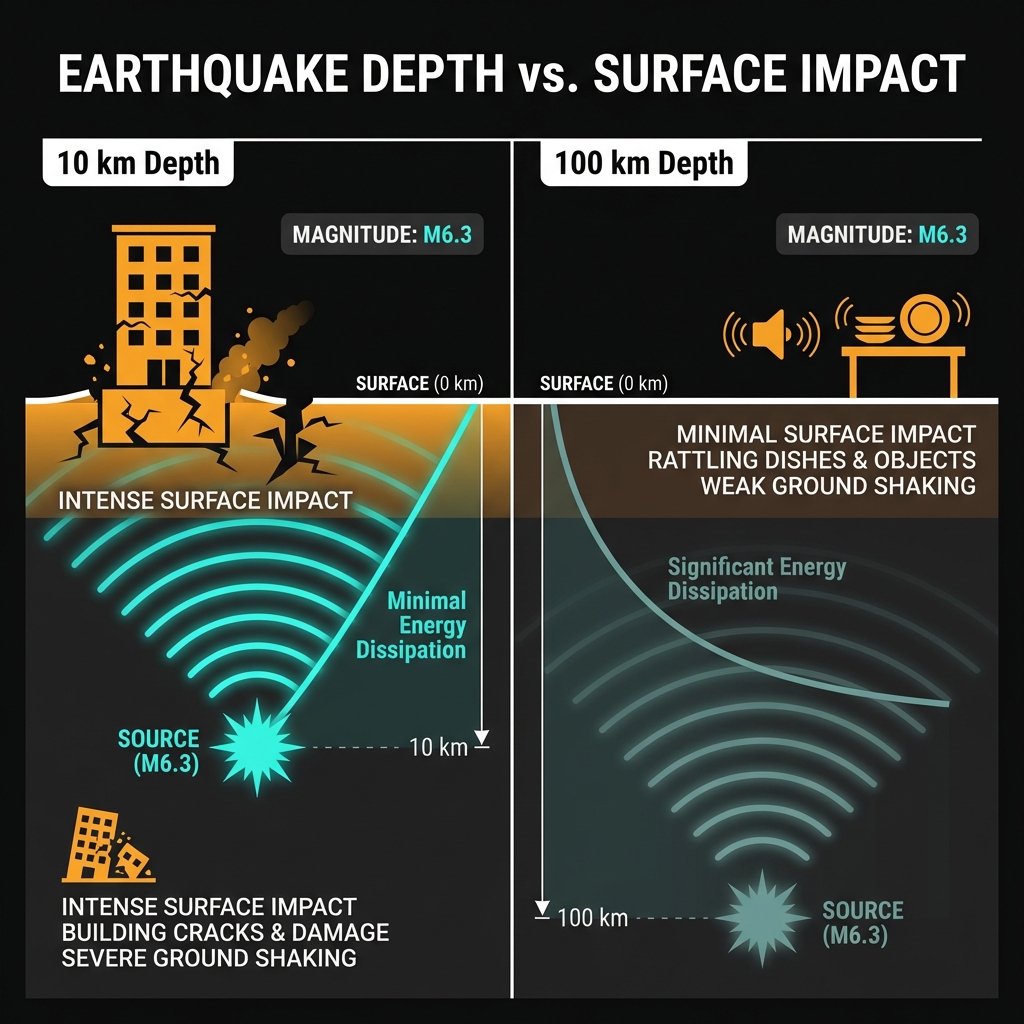
At 10 kilometers depth, this earthquake sits within the crust’s brittle upper layers, meaning less energy dissipated during ascent and more intense ground motion at the surface. To put this in perspective: a magnitude 6.3 at 100 kilometers depth might rattle dishes; at 10 kilometers, it can crack foundations. The shaking was likely felt across Samoa and American Samoa, potentially reaching as far as Tonga, though the offshore location spared populated areas from the worst effects. This event caps a worrying week-long swarm that has produced four significant earthquakes in seven days, suggesting a temporary but significant shift in regional stress patterns. Unlike the isolated tremors that occasionally rattle the Pacific Ring of Fire, this sequence indicates the Earth’s crust is actively adjusting, with Sunday’s event representing the largest release of energy in the current episode. Seismologists note that while no tsunami warning was issued for this particular rupture, the shallow depth combined with the proximity to the 2009 rupture zone—a classic mega-thrust interface—demands careful monitoring for signs of triggered slip on adjacent fault segments.
What to Do Now
For residents in Lotofagā, Apia, and coastal villages across the Samoan islands, the shallow depth demands immediate precautions even in the absence of a tsunami warning. Inspect your home for fresh cracks in walls or foundations, particularly in concrete structures that absorb high-frequency shaking from shallow events. Check gas lines for the rotten-egg smell of leaks, and ensure your emergency kit includes at least seven days of water and supplies—standard preparation in this region, but worth verifying tonight. While Sunday’s event did not generate a tsunami, the proximity to the 2009 rupture zone means aftershocks could continue for days; sleep with shoes and a flashlight within reach, and identify the nearest high ground should a subsequent event trigger a different response from the ocean.
Looking Ahead
The Earth is speaking in a dialect familiar to this region—short, sharp, and close to the surface. Seismologists will be watching closely for the next 72 hours to determine whether this M6.3 represents the climax of the current swarm or merely a prelude to something larger, given the historical precedent of the 2009 mega-thrust event. At GeoShake, we continue to monitor the Tonga-Kermadec trench as the plates grind forward, reminding us that in the Pacific, geology keeps its own calendar—and today, the ground moved with a memory of what came before.
Track this event live on the map!
Download GeoShake and get instant earthquake alerts.
Download GeoShake