The Tremor That Keeps Returning
On the evening of March 22, 2026, the earth beneath Sındırgı shuddered once more—not with the destructive force that levels buildings, but with the insistent, repetitive twitch of a region that cannot seem to find stillness. This latest tremor, a magnitude 3.2 event at 8.39 kilometers depth, marked the latest entry in a relentless logbook of 386 earthquakes to rattle this corner of western Turkey in just seven days. Detected by the Turkish Disaster and Emergency Management Authority (AFAD) at 18:13 UTC, the quake arrived quietly, yet it speaks volumes about a landscape still reeling from the devastating magnitude 6.0 and 6.1 earthquakes that struck here less than a year ago.
Tectonic Context: Where Anatolia Meets the Aegean
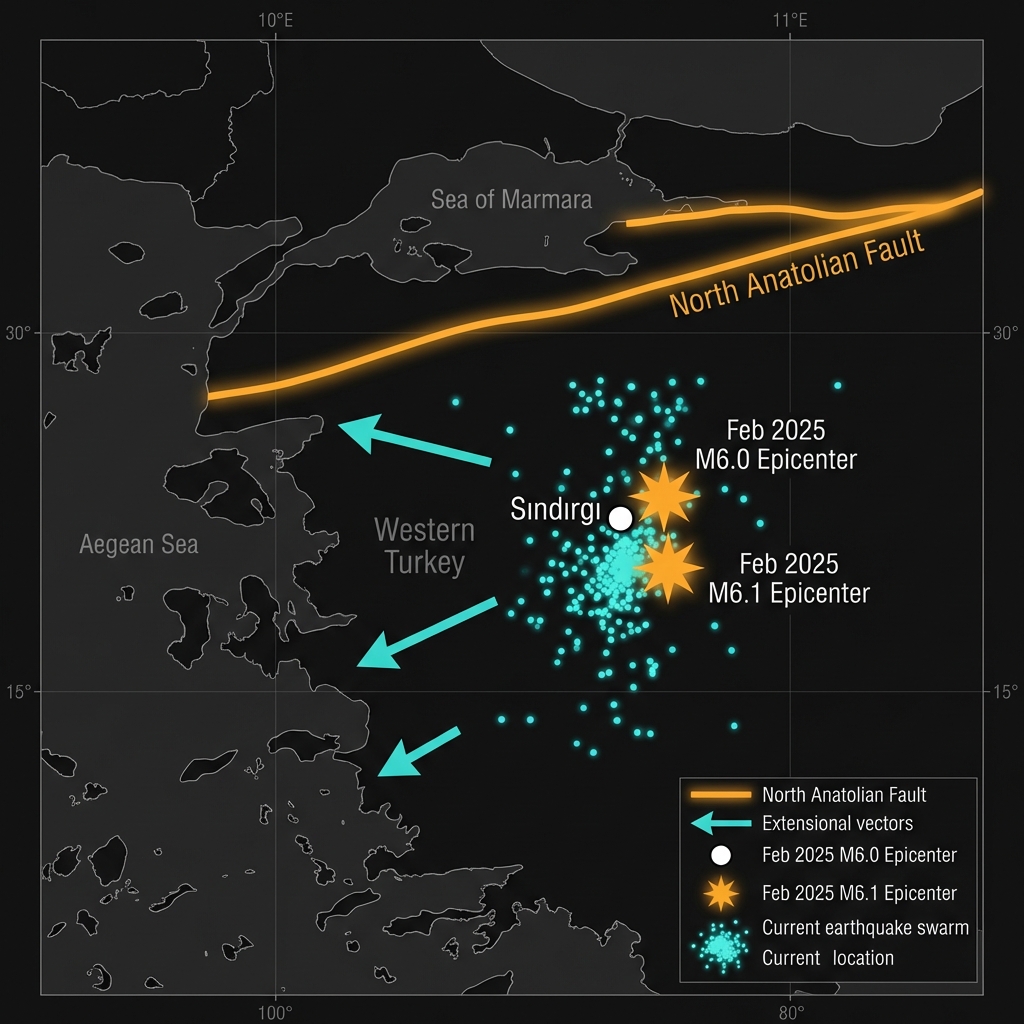
Sındırgı lies at a geologically precarious intersection, where the massive North Anatolian Fault system—responsible for some of Turkey’s most catastrophic historical earthquakes—grinds against the extending crust of the Aegean. This is extensional terrain: as the Aegean Sea pulls away from the Anatolian landmass, the crust stretches, thins, and fractures, creating a network of normal faults that can unleash sudden violence. The town found itself at the epicenter of this turmoil in early 2025, when a magnitude 6.0 earthquake struck just 7 kilometers to the southeast on February 9, followed weeks later by a magnitude 6.1 event near Bigadiç, only 15 kilometers away. Those quakes damaged hundreds of structures and served as grim reminders that western Turkey’s seismic respite is always temporary. Seismologists note that the current swarm clusters precisely along the fault segments ruptured last year, suggesting these hundreds of tremors represent the crust’s slow, grinding adjustment to stress changes imposed by those larger shocks.
The Shallow Truth: Feeling Every Jolt
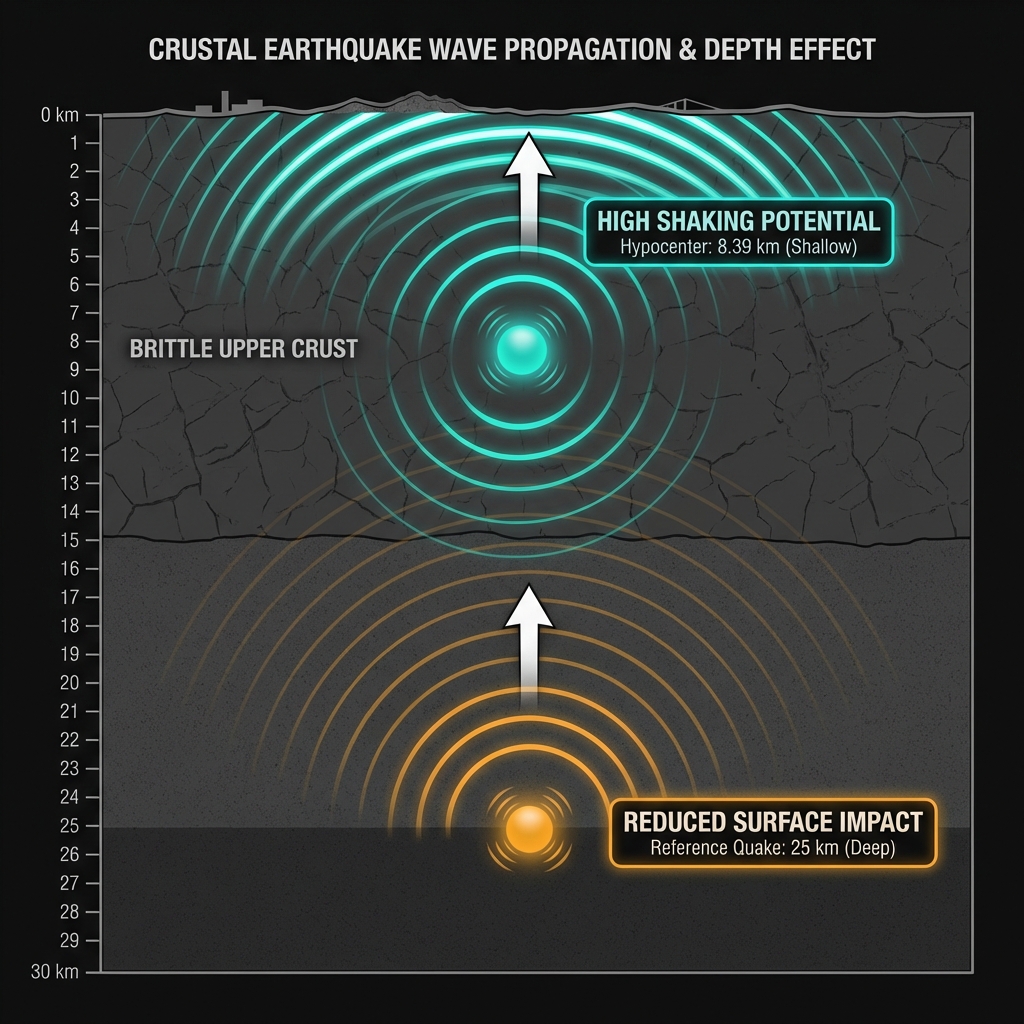
At 8.39 kilometers deep, this latest quake qualifies as shallow-focus—seismological shorthand for events where the rupture occurs in the brittle upper crust, allowing seismic waves to travel to the surface with minimal energy loss. While a magnitude 3.2 earthquake releases roughly the energy of a few tons of TNT, its shallow provenance means residents within 10 to 20 kilometers likely felt a sharp jolt or a sudden lateral sway, comparable to a heavy truck colliding with a building’s foundation or a train passing uncomfortably close. Earlier in the week, a magnitude 4.0 quake at 14 kilometers depth—the largest of the current sequence—would have produced significantly stronger shaking, rattling windows and fraying nerves across Balıkesir Province.
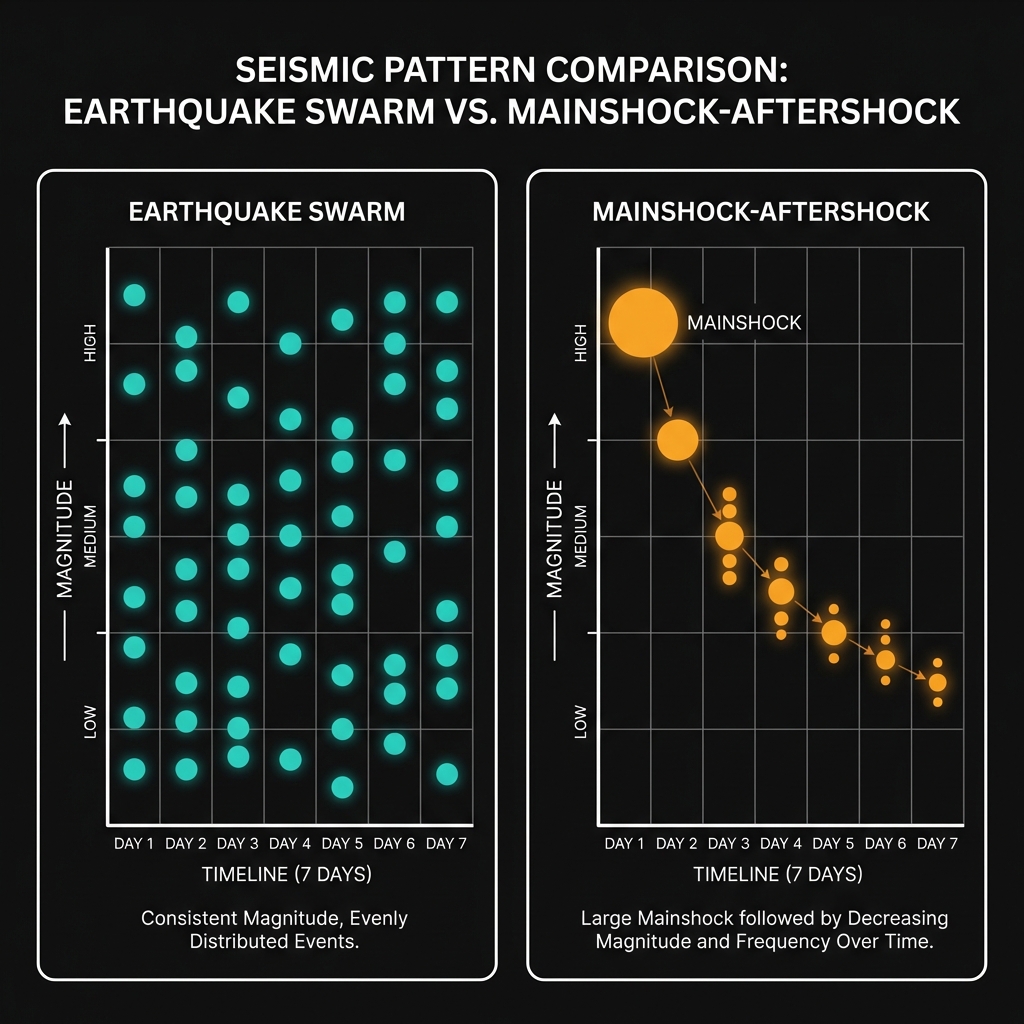
The sheer frequency of these events, averaging more than one earthquake every 25 minutes for a full week, indicates a fault system undergoing what geophysicists call “aseismic creep” punctuated by brittle failures—small locks breaking along a slowly moving boundary. This behavior differs from classic mainshock-aftershock sequences; instead, Sındırgı is experiencing a true earthquake swarm, where energy releases in scattered bursts rather than a single dominant rupture followed by tapering reverberations. Seismologists classify such swarms as evidence of complex fault interactions, where fluid movements or slow slip deep underground trigger successive failures along adjacent fault patches.
Looking Ahead: When the Swarm Subsides
For the residents of Sındırgı, the question is not whether the ground will move again, but whether the next tremor will remain within the magnitude 3 to 4 range, or whether the accumulated stress will trigger something larger. AFAD’s monitoring networks remain on high alert, tracking the swarm’s migration patterns and depth variations for clues that the fault might be preparing for a more significant rupture. Historical context offers both comfort and caution: the region has seen similar swarms die away into silence, but it has also witnessed them foreshadow destructive events, as the 2025 magnitude 6.0 quake itself demonstrated. In the end, this shallow M3.2 tremor serves as a tactile reminder that the earthquake cycle does not end when the shaking stops—it merely enters a quieter phase, a geological holding of breath that could last days, months, or years, while the crust decides what comes next.
Track this event live on the map!
Download GeoShake and get instant earthquake alerts.
Download GeoShake