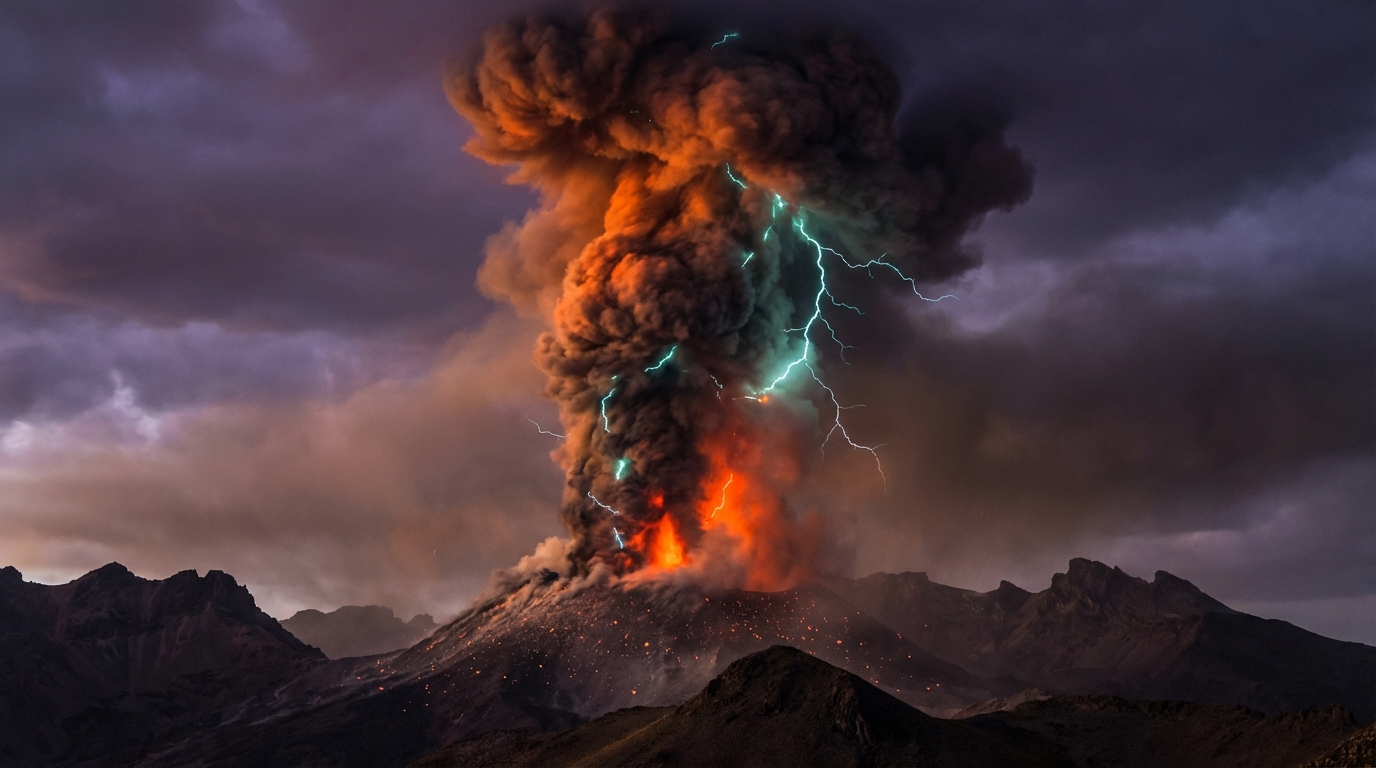
Global volcanic monitoring networks recorded 25 distinct volcanic events across 15 active volcanoes during the past 24 hours, according to the Smithsonian Global Volcanism Program and regional monitoring agencies. The most significant activity clustered along the Pacific Ring of Fire, with confirmed eruptions at Mount Dempo in Sumatra and Santiaguito in Guatemala. Aviation authorities issued critical ash advisories for three major stratovolcanoes, with particulate plumes reaching flight levels up to 7,000 meters above sea level.
Which Volcanoes Produced Confirmed Eruptions Today?
Mount Dempo, located in Sumatra, Indonesia, generated a confirmed eruption during the reporting period, according to the Smithsonian Global Volcanism Program. The stratovolcano, which stands at 3,173 meters elevation, produced explosive activity that registered on regional seismic networks. No specific ash column height was immediately reported for this event, though monitoring agencies continue to assess eruptive intensity.
Santiaguito volcano in Guatemala also recorded confirmed eruptive activity within the last 24 hours. This dome complex, situated on the southwest flank of Santa María volcano, frequently produces hazardous pyroclastic flows and ash emissions that impact local agricultural communities. The current eruption follows the volcano’s typical pattern of dome growth and subsequent collapse events.
How High Did the Ash Clouds Rise Today?
Three volcanoes generated ash columns reaching aviation-critical altitudes during the past day. Sabancaya volcano in Peru produced the highest plume, with ash emissions reaching 7,000 meters (23,000 feet) above sea level, according to volcanic ash advisory centers. Semeru volcano in East Java, Indonesia, generated an ash column reaching 4,600 meters (15,000 feet), while Reventador in Ecuador produced plumes extending to 4,300 meters (14,100 feet).
These altitudes place the ash clouds directly within commercial flight corridors, particularly affecting routes traversing the Andes and Indonesian archipelago. Wind patterns at these elevations typically drive ash dispersion toward the east at Sabancaya, potentially affecting airspace over Bolivia and Brazil, while Semeru’s plumes generally track toward the Indian Ocean.
What Should Aviation Authorities Monitor?
Volcanic ash advisories remain active for Sabancaya, Semeru, and Reventador as of the latest reporting period. The Volcanic Ash Advisory Centers (VAACs) responsible for these regions have not issued specific aviation color codes for all events, though the confirmed ash heights necessitate immediate flight path adjustments. Aircraft encountering volcanic ash face severe engine damage, abrasion of windshields, and contamination of ventilation systems.
Pilots operating near the Andes should coordinate with the Buenos Aires VAAC for Reventador and Sabancaya updates, while those traversing Indonesian airspace should monitor Darwin VAAC advisories for Semeru. Flight operations near Sumatra must additionally account for Dempo’s eruptive status, even in the absence of confirmed ash altitude data.
Where Is the Pacific Ring of Fire Most Active Today?
Indonesia dominated global volcanic activity statistics with multiple simultaneous events across its archipelago. Beyond Dempo and Semeru, monitoring networks detected activity at Dukono, Ibu, Lewotobi, Sakurajima (Japan), and Fuego (Guatemala). This clustering reflects the intense tectonic forces generated by the subduction of the Indo-Australian Plate beneath the Eurasian Plate.
South American volcanoes contributed significantly to the global tally, with Ecuador’s Reventador joining Peru’s Sabancaya in producing measurable ash emissions. The Philippines also registered multiple active systems, including Mayon, Taal, and Canlaon, though these volcanoes produced lower-intensity events during the current reporting window. Hawaii’s Kilauea continued its long-duration effusive activity, adding to the 25 total events recorded globally.
| Volcano | Location | Event Type | Alert Level |
|---|---|---|---|
| Sabancaya | Peru | Ash Advisory | Not Specified |
| Semeru | Indonesia | Ash Advisory | Not Specified |
| Reventador | Ecuador | Ash Advisory | Not Specified |
| Dempo | Sumatra, Indonesia | Eruption | Not Specified |
| Santiaguito | Guatemala | Eruption | Not Specified |
| Fuego | Guatemala | Activity | Not Specified |
| Sakurajima | Japan | Activity | Not Specified |
| Sangay | Ecuador | Activity | Not Specified |
| Dukono | Indonesia | Activity | Not Specified |
| Mayon | Philippines | Activity | Not Specified |
| Ibu | Indonesia | Activity | Not Specified |
| Lewotobi | Indonesia | Activity | Not Specified |
| Canlaon | Philippines | Activity | Not Specified |
| Kilauea | Hawaii, USA | Activity | Not Specified |
| Taal | Philippines | Activity | Not Specified |
Frequently Asked Questions
What does an ash advisory mean for aircraft operations?
An ash advisory indicates that volcanic ash has been detected at altitudes that may affect aircraft operations, typically above 3,000 meters. Pilots must avoid these areas because volcanic ash particles can melt inside jet engines, causing catastrophic failure, and abrade aircraft surfaces. Airlines typically reroute flights around advisory zones by at least 100 nautical miles to ensure safety margins.
How do scientists determine the height of volcanic ash clouds?
Volcanologists utilize satellite-based infrared sensors, ground-based radar systems, and visual observations from monitoring stations to calculate ash column heights. The temperature difference between the ash cloud and surrounding atmosphere allows satellites to estimate altitude through thermal profiling. Ground networks then validate these measurements using parallax calculations and direct lidar detection when visibility permits.
Why does Indonesia experience so many simultaneous volcanic eruptions?
Indonesia sits at the convergence of three major tectonic plates—the Eurasian, Indo-Australian, and Pacific plates—creating one of Earth’s most complex subduction zones. This geological setting produces frequent magma generation and volcanic arcs stretching across the archipelago. The region hosts over 130 active volcanoes, making simultaneous eruptions statistically probable during periods of heightened tectonic stress.
Track this event live on the map!
Download GeoShake and get instant earthquake alerts.
Download GeoShake